Towards trustworthy AI
How can machine-learning systems remain useful when data are distributed, heterogeneous, private, and interpreted by people with different needs? This question connects my work on federated learning, networked data, explainability, and robust optimization.
I develop mathematical foundations and practical methods that make distributed learning systems more reliable, understandable, and responsive to their users. Three themes run through this work:
- Federated and networked learning: learning across related datasets without centralising them.
- Personalised and explainable ML: adapting predictions and explanations to different users and contexts.
- Robust, privacy-aware optimization: designing scalable methods that tolerate imperfect data, communication, and computation.
Current projects
Several grants support this research programme:
-
A Mathematical Theory of Trustworthy Federated Learning (MATHFUL)
Funded by the Research Council of Finland (Decision #363624)
More Info -
A Mathematical Theory of Federated Learning (TRUST-FELT)
Funded by the Jane and Aatos Erkko Foundation (Decision #A835)
More Info -
Forward-Looking AI Governance in Banking & Insurance (FLAIG)
Supported by Business Finland
Federated learning
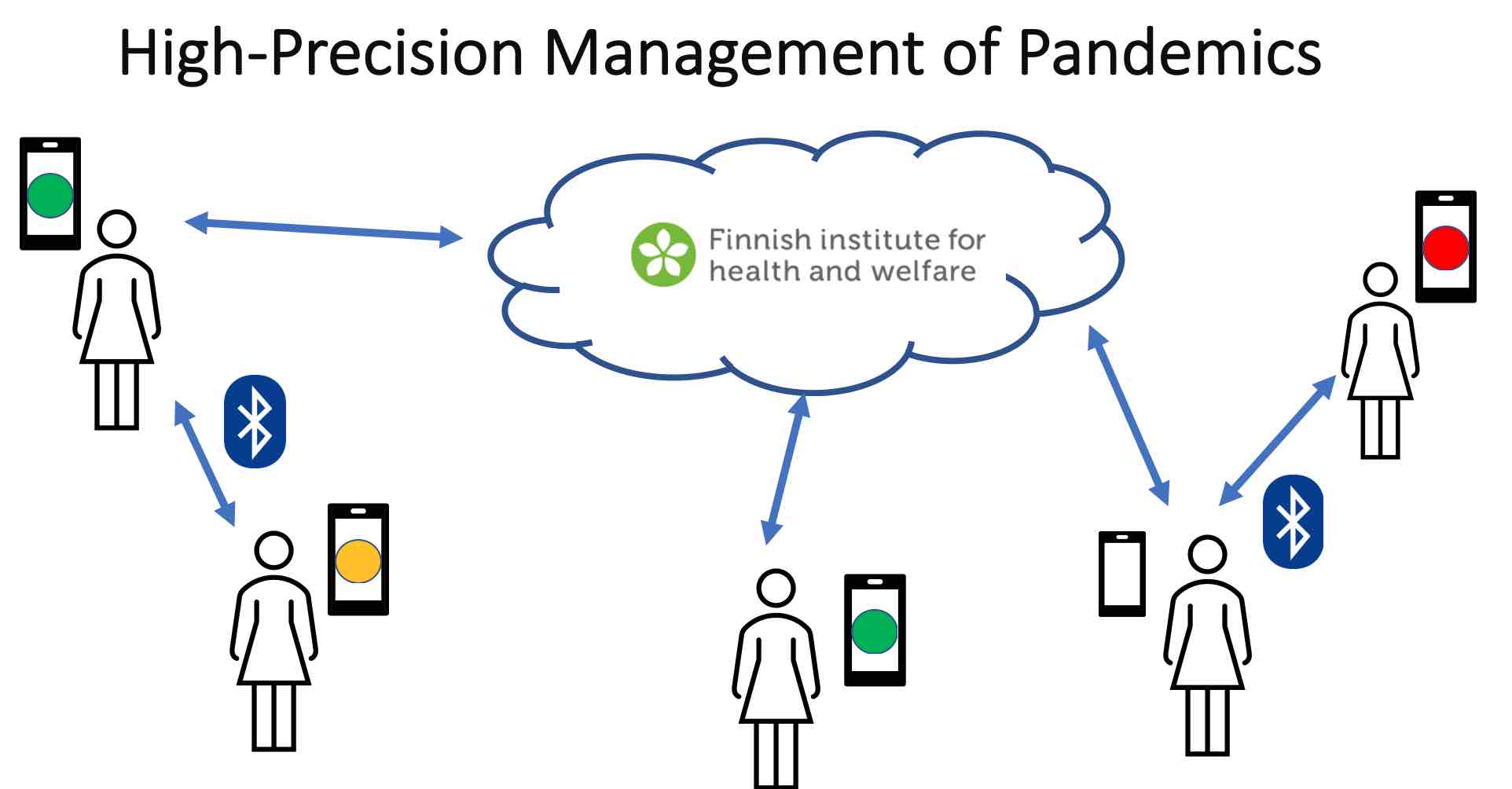
The era of big data over networks demands solutions for handling interconnected, heterogeneous datasets. A prime example is pandemic management, where wearables and smartphones generate local datasets tied by physical, social, or biological network structures. These datasets often vary in statistical properties but exhibit intrinsic relationships.
My research introduces networked exponential families, a probabilistic model that addresses these challenges. The model enables:
- Adaptive Data Pooling: Groups similar datasets to build personalized predictions.
- Privacy-Preserving Techniques: Ensures data confidentiality in federated settings.
- Scalable Optimization: Employs robust methods to handle imperfections in data and computation.
Selected publications
-
“Clustered Federated Learning via Generalized Total Variation Minimization”
Y. SarcheshmehPour, Y. Tian, L. Zhang, A. Jung, IEEE Transactions on Signal Processing, 2023.
Read More (DOI: 10.1109/TSP.2023.3322848) -
“On the Duality Between Network Flows and Network Lasso”
A. Jung, IEEE Signal Processing Letters, 2020.
Read More (DOI: 10.1109/LSP.2020.2998400) -
“Networked Exponential Families for Big Data Over Networks”
A. Jung, IEEE Access, 2020.
Read More (DOI: 10.1109/ACCESS.2020.3033817) -
“Semi-Supervised Learning in Network-Structured Data via Total Variation Minimization”
A. Jung et al., IEEE Transactions on Signal Processing, 2019.
Read More (DOI: 10.1109/TSP.2019.2953593) -
“Localized Linear Regression in Networked Data”
A. Jung and N. Tran, IEEE Signal Processing Letters, 2019.
Read More (DOI: 10.1109/LSP.2019.2918933)
Explainable AI (XAI)
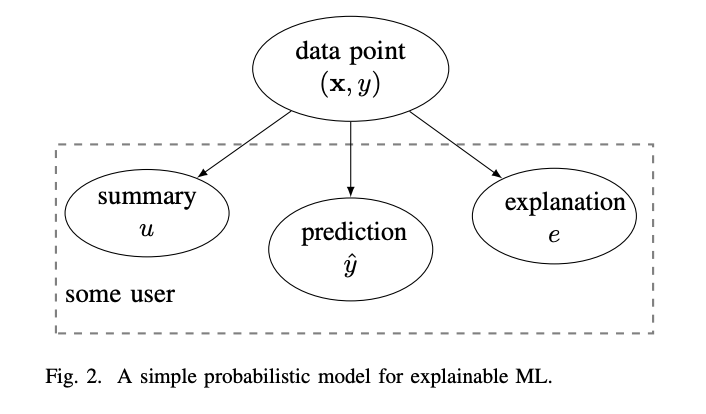
For AI systems to gain widespread acceptance, their predictions must be explainable. My research focuses on developing personalized explanations tailored to individual users. By measuring the reduction in conditional entropy, this method ensures that explanations align with the user’s knowledge and needs.
Key features
- User-Centric Explanations: Accounts for user background and preferences.
- Model-Agnostic Framework: Compatible with any machine learning model.
- Efficient Implementation: Requires minimal training data: just data points, predictions, and user-provided summaries.
Selected publications
-
“Explainable Empirical Risk Minimization”
L. Zhang, G. Karakasidis, A. Odnoblyudova, et al., Neural Computing and Applications, 2024.
Read More -
“An Information-Theoretic Approach to Personalized Explainable Machine Learning”
A. Jung and P. H. J. Nardelli, IEEE Signal Processing Letters, 2020.
Read More (DOI: 10.1109/LSP.2020.2993176)
Work with me
I welcome conversations with researchers and organisations working on federated learning, trustworthy AI, explainability, and learning over networks. Prospective Master’s students can review current themes and application guidance on the Supervision page.
For publications and researcher identifiers, see Google Scholar and ORCID, or send me an email.