
Academic service reflects the trust universities and professional communities place in researchers to evaluate work fairly, maintain standards, and support the next generation. My roles include leading a professional society chapter, examining doctoral theses at other universities, evaluating funding applications, and committee work at Aalto. My independent volunteer work against academic bullying has its own Activism page.
Professional societies
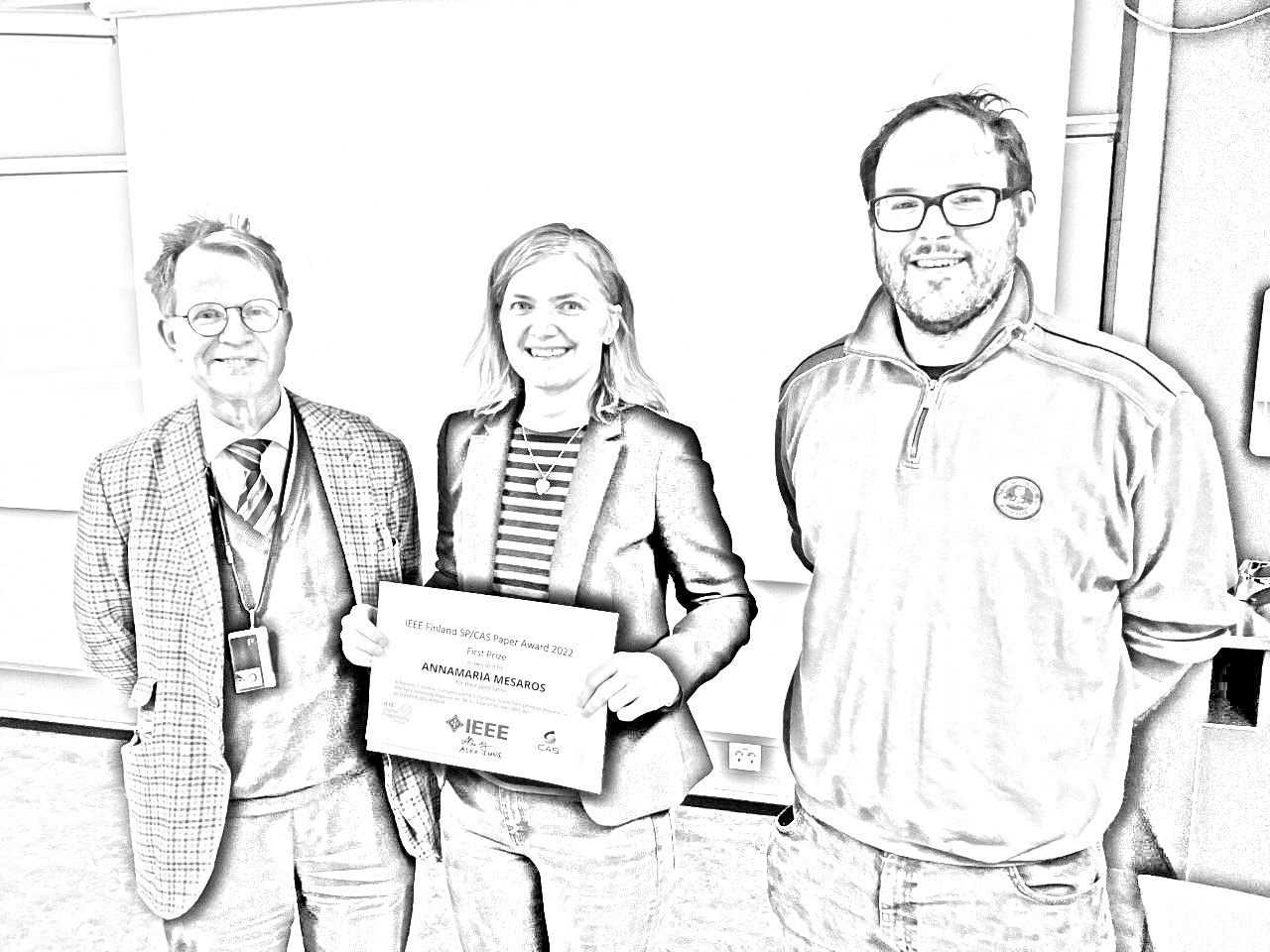
- Chair of the IEEE Finland Section SP01/CAS04 Society Chapter, 2019–2023. The joint chapter of the Signal Processing and Circuits and Systems Societies is the local home of the two societies in Finland: it brings researchers from the Finnish universities and industry together around invited talks and events, and acts as the link between them and the societies’ international activities. Among other things, the chapter ran the annual IEEE Finland SP/CAS Paper Award during my term. IEEE recognised the term with a certificate of appreciation for “Notable Services and Contributions towards the advancement of IEEE and the Engineering Professions.”

Doctoral thesis pre-examination
Pre-examiner (preliminary examiner) of doctoral dissertation manuscripts, appointed by the awarding faculty:
- 2026 · M. Tuononen, “Towards Interpretable Machine Learning Models for the Physical Layer of 6G,” School of Computing, University of Eastern Finland (FI).
- 2026 · S. Sheikhi, “Trustworthy Distributed Intelligence for Security and Resilience in the Edge-Cloud Continuum,” Faculty of Information Technology and Electrical Engineering, University of Oulu (FI).
- 2025 · A. Klemetti, “Practical Approaches to Cost-Efficient Deep Learning: Taxonomy, Experiments, and Industry Insights,” Faculty of Science, University of Helsinki (FI).
- 2024 · R. Savvides, “Statistical Methods for Testing Visual Patterns, Selecting Models, and Bounding Model Errors,” Faculty of Science, University of Helsinki (FI).
Opponent, examiner, and grading committee
Public defences and doctoral examinations at other universities:
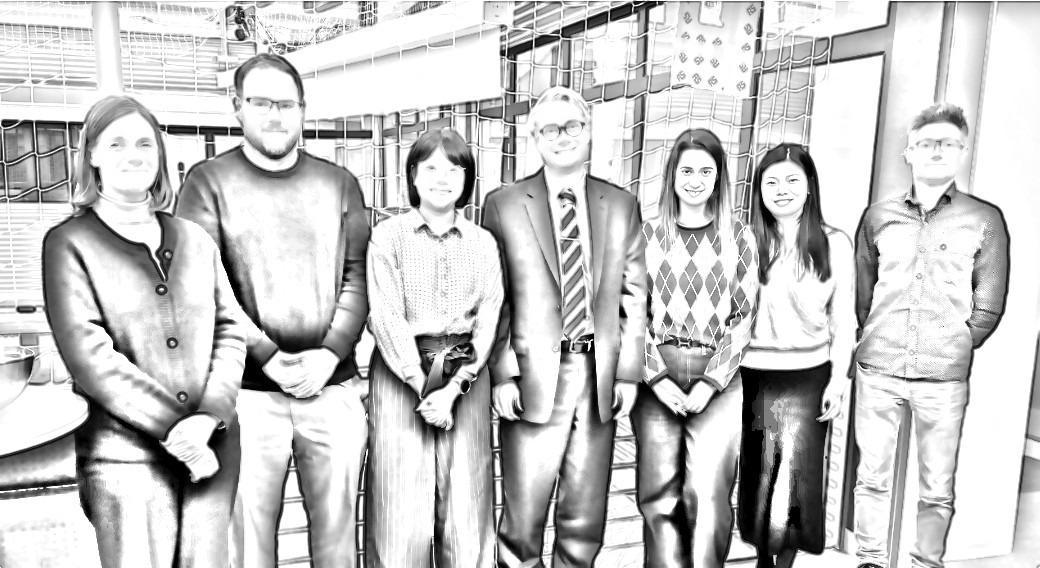
- 2026-09-30 · Member of the grading committee (betygsnämnd) for R. Brännvall, “Privacy Preserving and Scalable Machine Learning at the Edge,” Luleå University of Technology (SE).
- 2026-02-13 · Opponent for A. Klemetti, “Practical Approaches to Cost-Efficient Deep Learning: Taxonomy, Experiments, and Industry Insights,” University of Helsinki (FI).
- 2026-01-26 · Faculty opponent (fakultetsopponent) for C.-H. Hu, “Wireless Federated Learning: Efficient Communication and Resource Management,” Linköping University (SE).
- 2025-10-22 · Jury member and examiner for A. Zhaikhan, “Reinforcement Learning by Networked Agents,” EPFL, Lausanne (CH).
- 2025-02-10 · Opponent for A. Mahmoudi Benhangi, “Toward Efficient Federated Learning over Wireless Networks: Novel Frontiers in Resource Optimization,” KTH Royal Institute of Technology, Stockholm (SE).
- 2024-05-24 · Faculty opponent (fakultetsopponent) for N. Fouladgar, “Affect Detection with Explainable AI for Time Series,” Department of Computing Science, Umeå University (SE).
- 2019-09-16 · Member of the grading committee for P. del Aguila Pla, “Inverse Problems in Signal Processing: Functional Optimization, Parameter Estimation, and Machine Learning,” KTH Royal Institute of Technology, Stockholm (SE).
- 2018-01-26 · Examiner (rapporteur) on the thesis jury for L. J. Martin, “Robust and Efficient Data Clustering with Signal Processing on Graphs,” EPFL, Lausanne (CH).
Funding application evaluation
External evaluator of applications for research funding and funded doctoral positions:
- 2026 · External evaluator for the Doctoral Programme in Technology (DPT), University of Turku (FI), in the 2026 call for funded doctoral researcher positions. I assessed the applications assigned to the computing and information and communication technology panel, scoring each on the feasibility of the planned implementation, the quality of the research plan, and the applicant’s background, and wrote a short justification for every score for the programme committee.
- 2020, 2023 · Reviewer for the Spark funding scheme of the Swiss National Science Foundation (SNSF) (CH), and member of the Spark Evaluation Committee. Spark funds novel and unconventional ideas that can be tested quickly and with limited resources, and is assessed double-blind: reviewers see neither the identity nor the affiliation and track record of the applicant, so the judgement rests on the originality, scientific quality and potential impact of the proposed project alone.
- 2022 · Reviewer for the Personal Research Grants programme of the Israel Science Foundation (ISF) (IL).
University committees
- Member of the Teaching Evaluation Committee (SCITEC) of the Aalto University School of Science since 2023, also referred to as the school’s Teaching Competence Assessment Committee. SCITEC assesses the teaching competence of candidates in tenure-track recruitment and in the later evaluations leading to tenured and promoted positions. It has an independent role: it issues its own statement on each candidate’s teaching competence, along with recommendations such as pedagogical training or trying out different teaching methods. Members are drawn from across the school’s departments and include an educational developer and students trained to evaluate teaching. I use the role to keep student well-being on the agenda alongside the usual metrics.